
Why Your Energy Bills Keep Increasing
Your thermostat is set where it always is, your routine has not changed, and yet the electric bill keeps climbing month after month. It is a frustrating part of owning a home in Florida, because higher energy bills tend to show up before you notice anything wrong with the house.
Some of that increase is out of your hands. Utility rates change, and a hotter month means more cooling. But a steady climb that keeps going can point to your heating and cooling system losing efficiency a little at a time. Here is how to tell the difference, what usually causes it, and which fixes actually help.
Start With the Numbers on Your Energy Bills
Before blaming the air conditioner, look at the usage on your bill, not just the dollar amount. Your bill lists the kilowatt hours you used, and many bills include a usage history chart so you can compare against earlier months. If the dollars went up but your kilowatt hours stayed about the same, the change is mostly on the rate side.
If your usage itself is higher than it was during similar weather last year, something in the home is using more power. A new appliance, a pool pump, or more people in the house can explain it. When none of those changed, the system that runs the most hours is the first place to look, and in a Florida home that is usually the air conditioner.
Why Small Losses Add Up in a Florida Home
Around Tampa Bay, the cooling season is long and the air conditioner carries a heavy load for most of the year. That is why efficiency matters so much here. A system that has slipped a little costs a little more every hour it runs, and here it runs a lot.
Humidity adds to the work, since the system has to pull moisture out of the air as well as cool it. The house may still reach the temperature you set, but the unit runs longer to get there, and those longer run times are what you end up paying for.
Dirty Filters and Coils Make the System Work Harder
Airflow is the first thing to suffer when a system is neglected. A clogged filter chokes the air moving across the indoor coil, so the equipment has to run longer to deliver the same cooling. The ENERGY STAR maintenance checklist warns that a dirty filter raises energy costs and can wear the equipment out early.
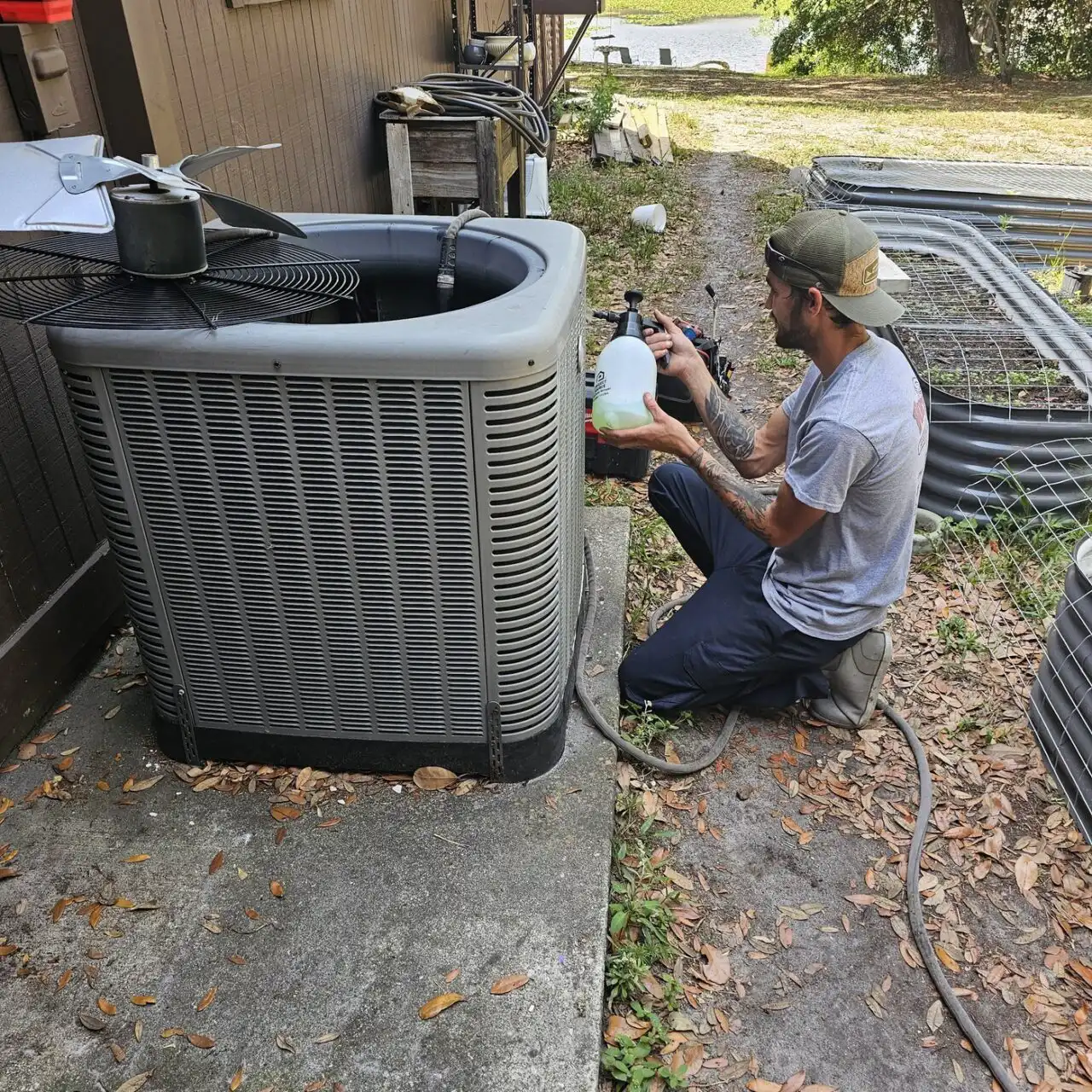
The coils matter just as much. The indoor coil absorbs heat from your home and the outdoor coil releases it, and both collect dust and grime over time. ENERGY STAR lists dirty coils as a cause of longer run times and higher energy costs. A professional AC coil cleaning restores that heat transfer so the unit can finish its job and shut off.
Refrigerant Problems and Worn Parts
Your system is designed to run on a specific refrigerant charge. When a leak lets that charge drop, the equipment loses cooling capacity and runs longer to make up the difference. ENERGY STAR also notes that too much or too little refrigerant makes a system less efficient. Topping it off without finding the leak only delays the problem, so this is a job for proper HVAC repair.
Electrical parts wear out too. A weak capacitor or a struggling motor makes the whole unit work harder, and problems like these can show up on the bill before anything actually fails.
Leaky Ducts Cool the Attic Instead of Your Home
Many Florida homes run their ductwork through the attic, one of the hottest spaces in the house. According to ENERGY STAR, a typical house loses about 20 to 30 percent of the air moving through its duct system to leaks, holes, and poorly connected ducts. When those ducts run through the attic, that is cooled air you paid for, spilling into the heat instead of your rooms.
Duct problems are easy to miss because you rarely see them. Rooms that never quite cool down and a bill that climbs while the system seems fine are common clues. When old flex duct has broken down from years of attic heat, duct replacement may be the fix that finally stops the loss.
Simple Fixes That Help Right Away
A few habits make a real difference. Check the air filter every month during the cooling season and replace it when it looks gray or clogged. Keep plants and stored items clear of the outdoor unit so it can release heat freely, and make sure vents and return grilles are not blocked by furniture or rugs.
Your thermostat settings matter too. Letting the house warm up a few degrees while you are away or asleep means less run time, and a smart thermostat can handle that schedule for you. Pair these habits with regular tune-ups through a maintenance agreement, and small problems get caught before they turn into a bigger bill.
When an Upgrade Makes More Sense
Sometimes the bill is climbing because the system is simply getting old. Even with good care, an aging air conditioner loses some of its efficiency as parts wear, and repairs start coming more often. At some point you are paying twice, once for the repairs and again on every monthly bill.
If your system is getting up in years, needs a major repair, or keeps pushing your usage up despite regular maintenance, it is worth weighing the cost of fixing it against an HVAC replacement. A new, properly sized system can bring your usage back in line. Planning ahead helps, since choosing the best time to replace your HVAC unit lets you compare options without being rushed by a breakdown in July.
Don’t Wait for Another High Bill
Rising energy bills can be an early sign that your system needs attention, and the longer the problem runs, the more it costs. Start with the easy checks: compare your usage, change the filter, and clear space around the outdoor unit. If the bill keeps climbing after that, call Vortex Heating & Cooling at 813-427-9100. We work with homeowners across Pasco, Pinellas, Hillsborough, and Hernando counties, and we will find out whether your heating and cooling system is behind the higher bill.