
What Size HVAC System Does Your Home Need?
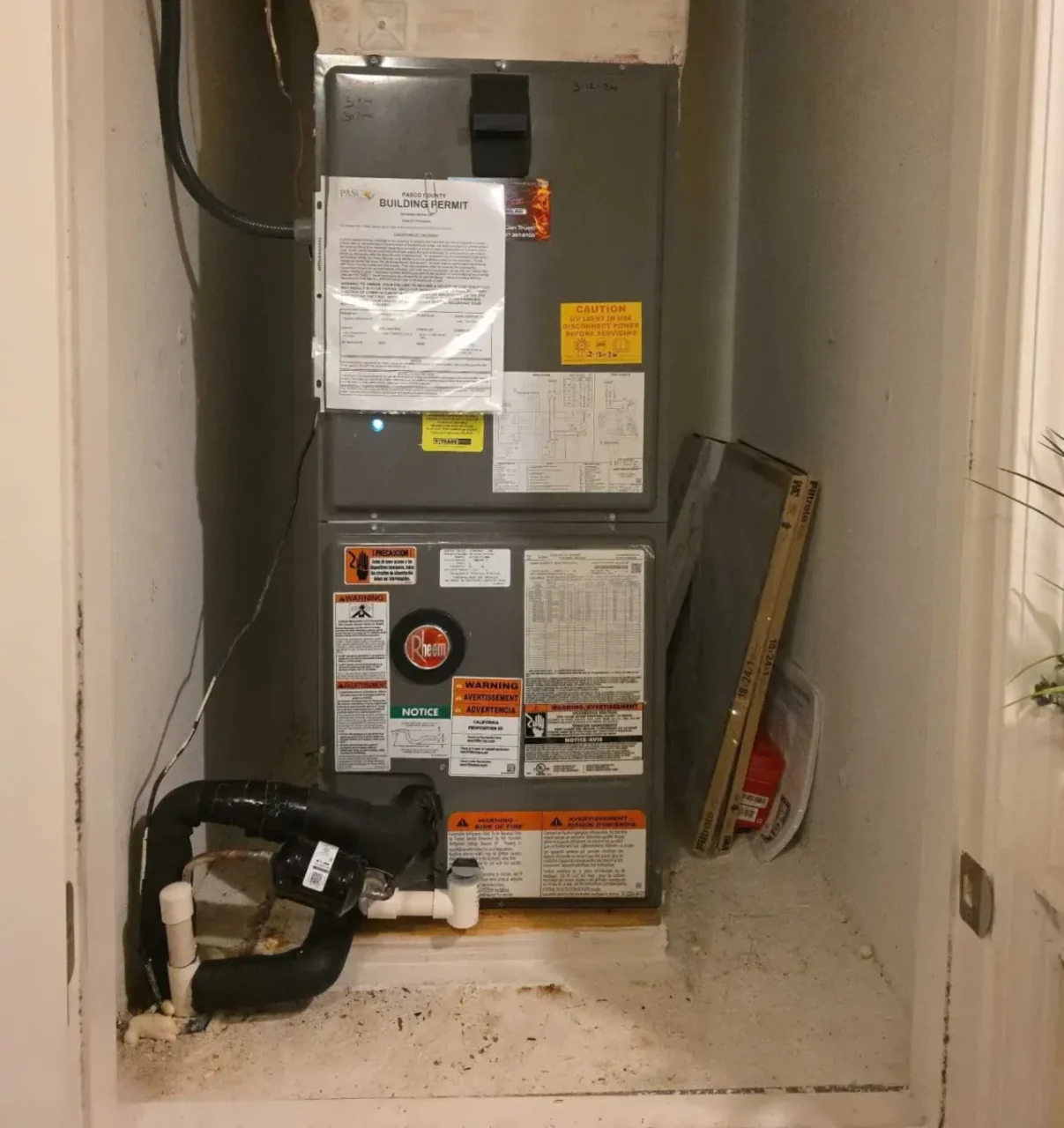
Figuring out what size HVAC system your home needs feels like it should come down to one number: how many square feet you have to cool. Ask three neighbors and you will hear three different rules of thumb, and every one is a guess. The truth is that the right size HVAC system has far less to do with a tidy formula than with how your specific house holds and loses heat.
Getting this wrong is expensive in ways that do not show up until you are living with the mistake. A system that is too big or too small costs you money every month, wears itself out early, and leaves you uncomfortable in the exact Florida weather it was supposed to handle. Here is why correct sizing matters, why the shortcuts fail, and how the process actually works.
Why HVAC System Size Matters More Than You Think
Your air conditioner does two jobs at once. It cools the air, and it pulls humidity out of it. On the Gulf Coast that second job is nearly as important as the first, because a house at 74 degrees with sticky, damp air still feels miserable. Both jobs depend on the system running for the right length of time, and run time is a direct result of how the equipment is sized against your home.
When the match is correct, the system runs in long, steady cycles that hold your temperature even and pull the moisture out of the air as it goes. When it is wrong in either direction, that balance falls apart. The equipment either never catches up or never settles down, and you feel it in your comfort, your power bill, and how long the unit lasts before it needs replacing.
What an Oversized System Does to Your Home
Bigger is not better with air conditioning, and an oversized unit is one of the most common mistakes we see on Florida homes. A system with too much capacity cools the space so fast that it hits the thermostat target and shuts off within a few minutes, drifts warm, kicks back on, and shuts off again. That rapid stop-and-start pattern is called short cycling, and it is hard on the equipment.
The comfort problem is just as real. Because the unit only runs in short bursts, it never stays on long enough to pull much humidity out of the air, so the house feels cold and clammy at once, with rooms that swing between too cold near the thermostat and not cool enough farther away. All that switching on and off also drives your energy use up and shortens the life of the compressor, the most costly part to replace.
What an Undersized System Does to Your Home
An undersized system has the opposite failure. It cannot keep up with the heat load on a hot afternoon, so it runs almost constantly and still struggles to reach the temperature you set. During a Florida summer that means a unit running from morning until night without ever getting ahead, which punishes your comfort and your electric bill while wearing parts out faster.
You also lose any margin for the worst days of the year, when the system needs a little extra capacity to hold the line. If your equipment is already maxed out on a normal July afternoon, it has nothing left when the heat index climbs. That is often the moment a struggling unit finally gives out and needs professional HVAC repair.
Why Square-Footage Rules of Thumb Fail
The classic shortcut is to assign a fixed amount of cooling per square foot and call it a day. That fails because two houses with the identical floor plan can have completely different cooling needs. Square footage tells you nothing about how much heat is actually getting into the home, and heat gain is the number that truly matters. A simple area calculation ignores your insulation, the number of windows and which direction they face, how much afternoon sun the house takes, your ceiling height, how well the home is sealed against air leaks, and the condition of your ductwork. A room with tall ceilings and west-facing glass gains far more heat than the same room shaded and tightly sealed, which is how homes end up a full ton too big or too small before the unit is ever turned on.
How Professionals Decide What Size HVAC System You Need
The right way to size a system is a calculation called a Manual J load calculation, and it is the industry standard for exactly this reason. Instead of guessing, it measures how much heat your home gains and loses so the equipment can be matched to reality, factoring in your square footage, insulation, window count and orientation, ceiling height, sun exposure, air leakage, and the demands of Florida heat and humidity. The result is a real number that points to the correct capacity for your house rather than a house that looks like yours on paper. From there the right equipment can be selected and the ductwork checked, since even a perfectly sized unit underperforms on leaky or undersized ducts. That groundwork is the difference between a comfortable home and years of frustration, which is why a proper load calculation is built into every HVAC installation we do.
When to Get a Load Calculation
You do not need a new load calculation every year, but there are a few moments when knowing what size HVAC system you need becomes essential. Any time you are putting in a brand-new system, that calculation should come first, before anyone quotes you a size, and the same is true when you replace aging equipment, because assuming the old unit was sized correctly just repeats whatever mistake was made the first time. It also matters when the home itself changes. If you have added a room, enclosed a porch, replaced your windows, or upgraded your insulation, your heat load has shifted and your equipment needs may have shifted with it. A load calculation before an HVAC replacement or major addition makes sure the new system fits the home you have now. Pairing the right size with a solid maintenance plan is how that equipment goes on to deliver its full lifespan.
Don’t Wait to Get Your HVAC System Size Right
The size of your HVAC system is a decision you live with for ten to fifteen years, so it is worth getting right the first time. Whether you are planning a new install, replacing a tired unit, or just tired of a home that never feels quite comfortable, a proper load calculation takes the guesswork out of it. Call Vortex Heating & Cooling at 813-427-9100 and let us determine the right size HVAC system for your actual home, so you get steady comfort, lower bills, and equipment that lasts.