What High Indoor Humidity Does to Your Home
High indoor humidity does quiet damage long before anyone feels sticky. In West Florida, the moisture your air conditioner cannot remove ends up in your closets, your wood floors, your door frames, and your family’s sinuses. It works around the clock, all year, and it never takes the summer off the way your comfort complaints do. Most homeowners only think about indoor humidity when the house feels muggy, but your home shows the evidence much earlier than your comfort does, and learning to read those signs is the cheapest protection there is. Here is what that moisture is doing behind the scenes, and how to stop it.
The Signs Your Home Shows First
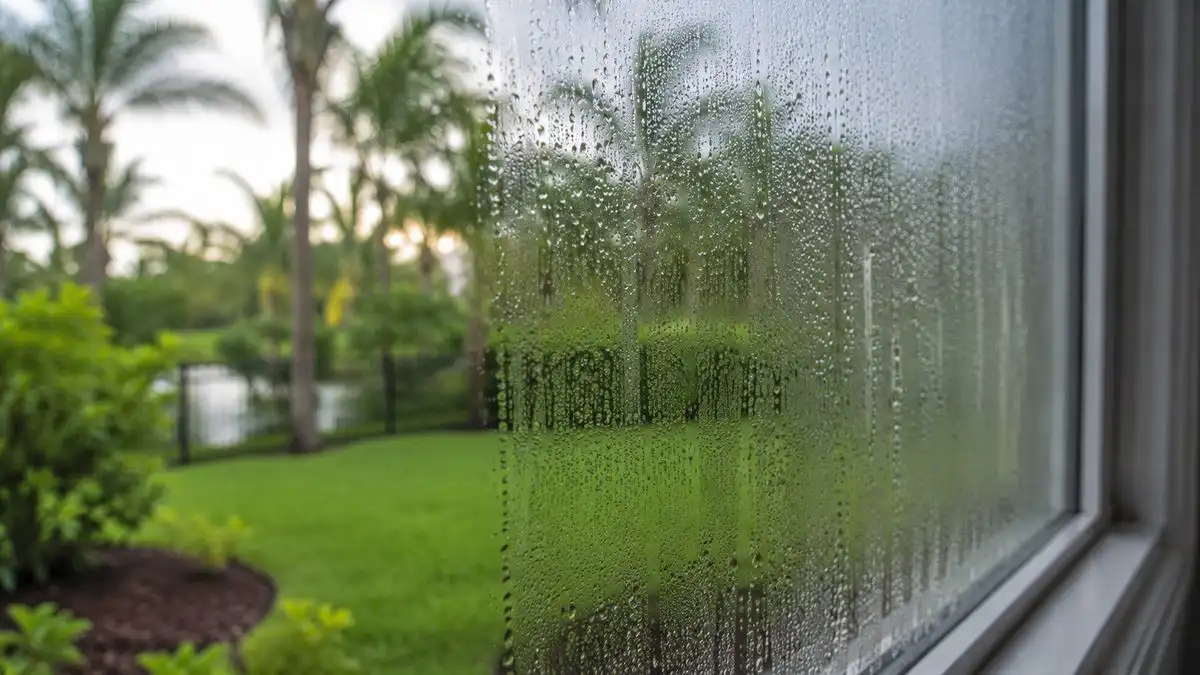
Wood swells with moisture, so doors that suddenly stick in summer and floorboards that cup at the edges are early warnings. Musty smells in closets and bathrooms mean moisture is settling where air does not circulate. Condensation on windows in the morning, damp-feeling bedding, and that stale odor when you come home after a weekend away all point the same direction. By the time you see spotting on ceilings or baseboards, the problem has been working for months.
The Rooms That Suffer First
Moisture problems do not spread evenly. Closets on exterior walls, bathrooms without strong exhaust fans, laundry rooms, and any bedroom where the door stays shut all day are the usual first victims, because still air lets humidity settle and soak in. Garages and the rooms above them run damp too. If you want a quick read on your house, open the least-used closet on a July afternoon and breathe in. If it smells like a beach rental in August, the rest of the house is fighting the same battle and simply hiding it better.
What Moisture Does to the House Itself
Sustained humidity above about 55 percent warps trim, peels paint, rusts hardware, and slowly delaminates furniture. It feeds dust mites, which are a leading allergy trigger, and it gives biological growth the only thing it was waiting for. Electronics and instruments suffer too; guitars go out of tune faster, and the hinges and locks in a damp house age years ahead of schedule. None of this announces itself; it accumulates, season after season, until a floor needs refinishing or a closet needs repainting. The repair bill for a humid house rarely lands on the air conditioner, but the air conditioner is usually where the problem started.
Why Your AC Is the First Suspect
Removing moisture is half of your air conditioner’s job. A system with dirty coils cannot wring water out of the air efficiently, a clogged drain line can send the water it does collect right back into the house, and leaky ductwork pulls humid attic air into your rooms every time the blower runs. An oversized system is the sneakiest culprit of all: it cools the air so fast it shuts off before dehumidifying, leaving the house cold and clammy at the same time.
Fixes That Actually Lower Indoor Humidity
Start with the system you own. A service visit that restores clean coils, clear drains, and a proper refrigerant charge often noticeably reduces humidity on its own, because a healthy system pulls gallons of water out of your air every day. Run bath and kitchen fans during and after showers and cooking, and make sure your dryer vent actually exhausts outdoors rather than dumping a load of steam into the garage. A smart thermostat with humidity readings tells you whether you are winning. For homes that stay damp after all that, whole-home dehumidification through your indoor air quality setup is the permanent answer, sized for the entire house rather than a single room.
What Healthy Indoor Humidity Feels Like
The target for Florida homes is roughly 45-55% relative humidity. Inside that range, the house feels noticeably cooler at the same thermostat setting, which is why fixing humidity often lowers cooling bills: many families discover they are comfortable at 76 degrees once the air is dry, where 73 still felt sticky before. Towels dry overnight again, windows stay clear in the morning, and that thick feeling when you walk in from outside is gone. A ten-dollar hygrometer, or the readout on a smart thermostat, tells you where you stand. If you are seeing 60 percent or higher day after day, the house is telling you something.
When Humidity Means the System Is Wrong
If every summer is a clammy one, no matter how well the equipment is maintained, the system itself may be mismatched to the house. Oversized units short-cycle, undersized units never catch up, and both leave moisture behind. That is a sizing and design conversation, and it is worth having, honestly, before sinking more money into add-ons. Bill and Krystal Hanna have spent 23 years walking Pasco County homeowners through exactly that decision, including when the right answer is a properly sized replacement and when it is not.
Don’t Wait for the Damage to Show
Sticking doors and musty closets are your house asking for help, and moisture damage only runs in one direction: it gets more expensive the longer it works. The fix usually starts smaller than homeowners fear, with a service visit and a few honest measurements rather than a sales pitch. If your home feels damp no matter what the thermostat says, or your hygrometer keeps reading 60 and above, call Vortex Heating & Cooling at 813-427-9100. We will find where the moisture is coming from, show you the numbers, and fix the cause instead of just treating the symptom.