
Common HVAC Problems in Florida Homes
Air conditioners fail in predictable ways, and in Florida they fail in a particular set of ways. Heat and humidity put a kind of stress on a system that most of the country never sees, and after enough years in enough houses the same handful of problems keep turning up. The good news in that is simple: almost none of them are mysterious, and most of them give warning before they strand you.
Here are the common HVAC problems we actually get called for across Pasco, Pinellas, Hillsborough and Hernando County, what causes each one, and how to tell the difference between something you can check yourself and something that needs a technician.
Clogged Drain Lines, the Most Common Call We Get
If there is one failure that defines air conditioning in this state, this is it. Your system pulls a startling amount of water out of the air on a humid day, and every drop leaves through one narrow pipe. Warm, wet and dark is exactly what algae and sludge want, so that line gradually closes up.
When it finally blocks, the water backs up. A system with a working float switch shuts itself off, which feels like a breakdown but is actually the safety doing its job. A system without one overflows into the pan and then into whatever is underneath, which is usually a ceiling. Water stains near the indoor unit, a system that stops for no obvious reason, or a drain outlet that is dry while the AC runs hard are all the same signal. A drain line cleaning clears it, and doing it as routine maintenance costs a fraction of the alternative.
A Frozen Coil in Ninety Degree Weather
Finding ice on an air conditioner in a Florida summer feels absurd, but it is common and it always means airflow or refrigerant.
Restricted airflow is the usual cause, and the usual cause of that is a filter nobody has changed. Starve the coil of air and its surface drops below freezing, condensation turns to ice, and the ice blocks what little airflow was left. Low refrigerant does the same thing from the other direction, and low refrigerant means a leak, because it is a sealed system and does not simply get used up. Either way, turn the system off and let it thaw before anything else. Running it frozen is how a compressor gets damaged. Frozen AC repair deals with the ice and then with whichever of the two causes it actually was.
Dirty Coils and the Slow Loss of Cooling
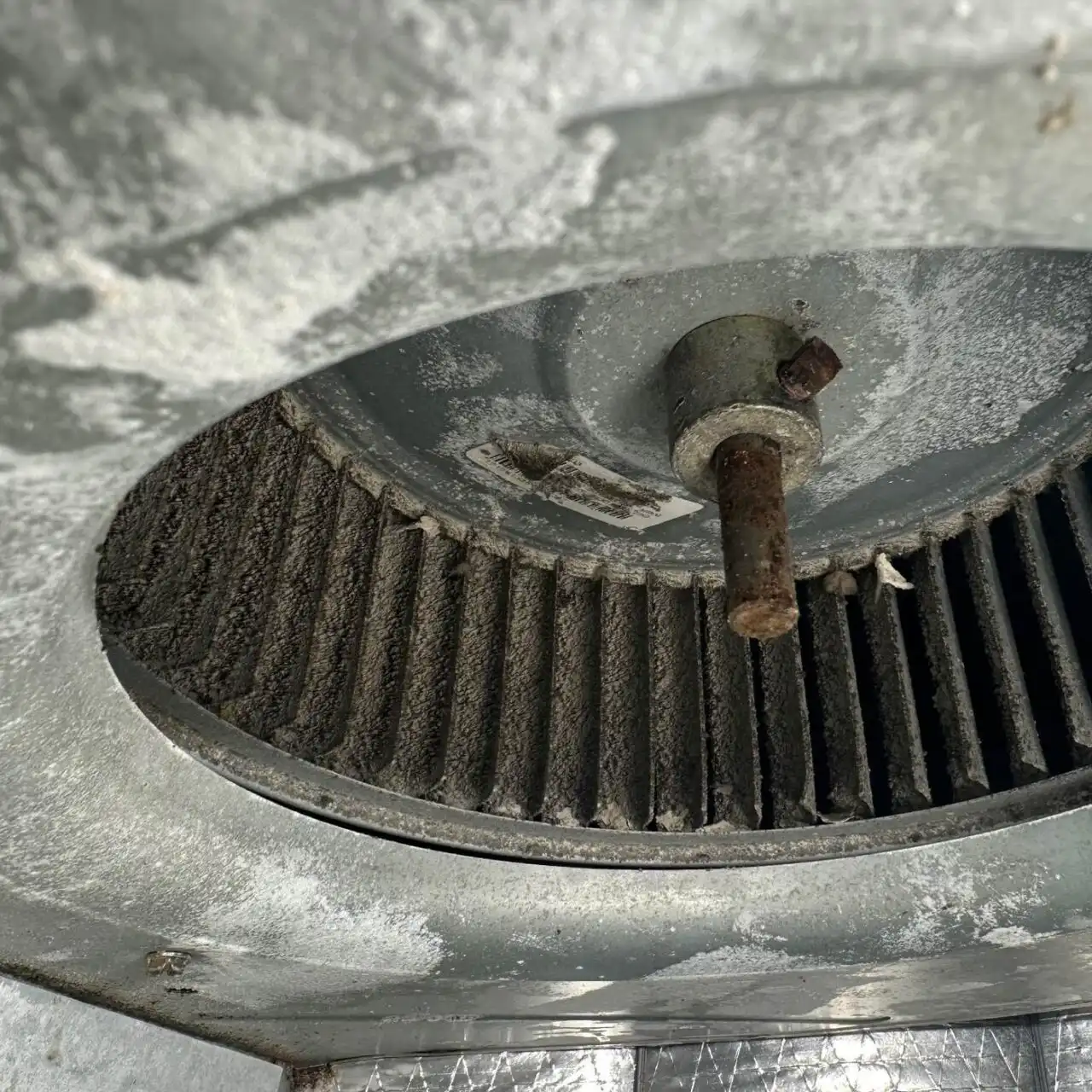
This one rarely announces itself. The outdoor coil sheds heat from your home into the air outside, and it can only do that if air moves freely through its fins. Grass clippings, pollen, dust and the general film that builds up over a Florida year all insulate it.
Nothing breaks. The system simply gets worse at its job, runs longer for the same result, and costs more every month while doing it. Most people never notice because the decline is gradual. An AC coil cleaning restores that heat transfer, and it is one of the few jobs where the improvement shows up on the next bill.
It Runs and Runs and Never Quite Gets There
A system that runs almost constantly on a hot afternoon is not necessarily broken, but it is telling you something. Sometimes the cause is one of the above. Sometimes the system is genuinely undersized for the house, which is common where additions or enclosed porches were added without anyone revisiting the equipment.
Age matters too. A system in its mid teens is working considerably harder than it did new, and parts that are merely worn rather than failed still cost you capacity. If it keeps up but only barely, and the bills reflect it, that is the point to have someone measure performance properly rather than wait for a failure. Sometimes the honest answer is replacement rather than another repair, and sometimes it is not.
Turning On and Off Every Few Minutes
Short cycling is the opposite complaint and it is harder on the equipment than long runs are. Starting a compressor is the most demanding thing it does, so a system that starts and stops repeatedly wears out faster than one that runs in longer, steadier cycles.
Causes range from the trivial to the structural: a thermostat in a bad spot catching sun or a draft, a dirty filter, low refrigerant, or a system oversized for the house. An oversized unit cools the air to temperature quickly, shuts off before it has removed much moisture, and leaves you with a house that is cold and clammy. That is why correct sizing matters more here than people expect.
Cool Air That Still Feels Damp
Removing humidity is half of what an air conditioner does in Florida, and when that half underperforms the house feels wrong even at a reasonable temperature. Windows fog, fabric feels heavy, and you push the thermostat down chasing a comfort problem that is not really about temperature.
Short cycling is a frequent cause. So is an oversized system, a failing blower, or simply a house that lets in more outside air than it should. Left alone it is not only uncomfortable, because sustained indoor humidity is what feeds mould and dust mites. Our indoor air quality work deals with the moisture side rather than just masking the symptom.
The Problems Hiding in the Ducts
Ductwork is out of sight and rarely suspected, which is why duct problems tend to run for years. In a Florida home much of it sits in an attic that gets brutally hot, and every leaking joint up there is cooled air you paid for being delivered to the insulation.
Rooms that never match the rest of the house, a system that runs long without an obvious fault, and dust that reappears immediately after cleaning are all worth a look upward. Duct cleaning and sanitizing handles what has built up inside; genuinely damaged or badly sealed runs need repair instead.
The Department of Energy and ENERGY STAR both cover the same ground if you want to read further.
When to Stop Troubleshooting and Call
Check the easy things first. Change the filter, make sure vents are open and unblocked, clear growth away from the outdoor unit, and confirm the thermostat is set the way you think it is. A surprising number of calls end there.
Past that, ice on the system, water where it should not be, burning smells, repeated breaker trips or a system that will not start are all reasons to stop and call someone. Vortex Heating and Cooling is a family-owned company with more than twenty years of experience handling these same problems for Florida homeowners. Call 813-427-9100 or contact us and we will come and look at it.