How to Get Your AC Ready for Hurricane Season
Hurricane season AC prep is one of those jobs Pasco County homeowners put off until a storm is already named and the stores are out of plywood. Your air conditioner sits outside in the weather all year, and it is one of the most expensive pieces of equipment attached to your home. It is also the one you will miss most in the muggy days after a storm passes, when the power is back but half the neighborhood is calling for service at once. A little attention in June can be the difference between cool air the day after a storm and a long, sweaty wait for repairs in the busiest season of the year. Here is what is actually worth doing, in the order it is worth doing it.
Start With the Outdoor Unit
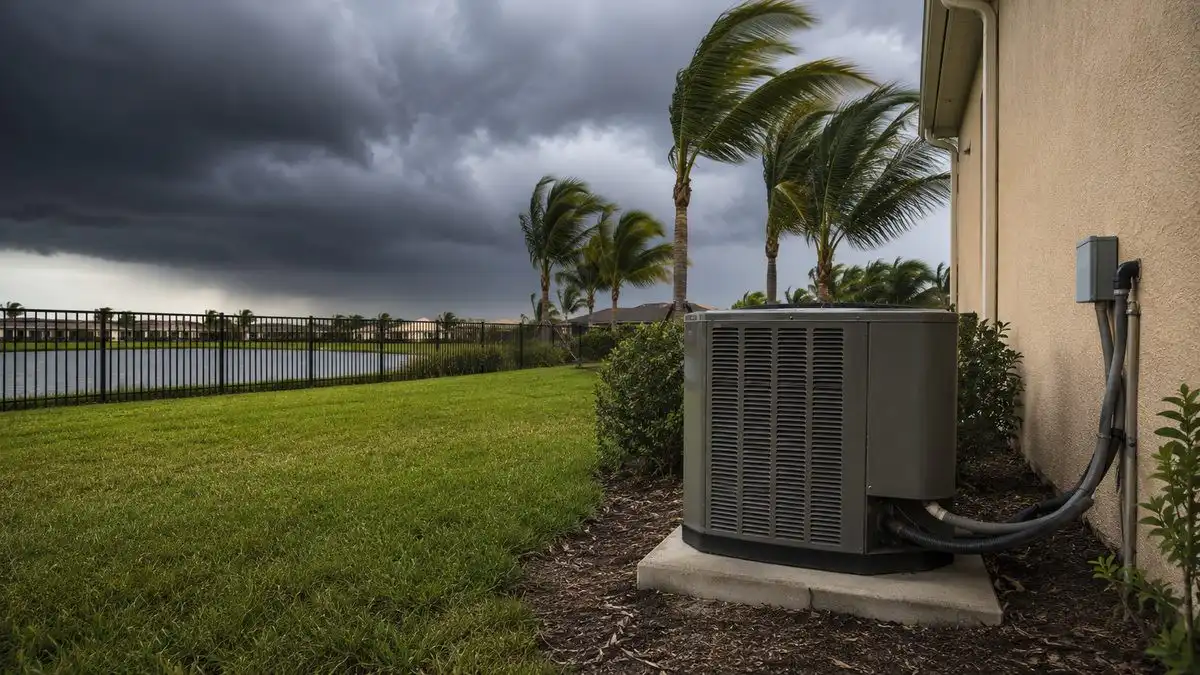
Your condenser is built to live outdoors, but flying debris is another story. Walk the yard and look at what could become a projectile in high winds: loose fence boards, patio furniture, potted plants, kids’ toys. Anything that can fly can crack a coil or bend the fan housing. Trim back branches that hang over the unit, and make sure the pad it sits on is level and solid. If the unit has been sinking or tilting, that is worth a service visit before the rain arrives, not after.
Think About Power Before You Lose It
Most storm damage to air conditioners does not come from wind or water. It comes from electricity. When power flickers, drops, and surges back, that voltage swing can take out capacitors, control boards, and compressors. A whole-home surge protector or a dedicated surge device on the condenser is inexpensive compared to the parts it protects. If a storm is approaching, the safest move is simple: shut the system down at the thermostat before conditions get rough, and leave it off until power is stable again.
Cool the House Down Ahead of Time
If a storm is on the way, run your system a few degrees cooler than normal while the power is still steady. A smart thermostat makes this easy to schedule. A well-cooled, closed-up house will hold reasonable temperatures for hours, which matters when outages stretch into the evening. Keep blinds and curtains closed on the sunny side, avoid running the oven, and the cool you banked will last noticeably longer. While you are at it, swap in a fresh filter so the system is not fighting restricted airflow when it works hardest, and clear the area around your return vents so the air it does move comes through clean.
After the Storm, Look Before You Restart
Once the weather clears, resist the urge to flip the system right back on. Look at the outdoor unit first. If it stood in floodwater, do not start it until a technician has checked the electrical components. If you see bent fan blades, crushed coil fins, or debris lodged inside the cabinet, the same rule applies. Running a damaged unit can turn a small repair into a full system replacement. If everything looks clean and dry, restore power, set the thermostat normally, and listen for anything that sounds different than it did before the storm.
Do Not Forget What the Storm Leaves Behind
The days after a storm are some of the most humid of the year, and your home feels it. Wet attics and soaked ground push moisture indoors, where it settles into ductwork and hangs in the air. That damp does not leave on its own; it lingers in closets and carpet and gives every musty smell a head start. If the house still smells off a week later, duct cleaning and sanitizing can clear out what the storm left behind, and an indoor air quality check will tell you whether the system is keeping up with the extra moisture load or quietly falling behind it.
A Word About Generators
Plenty of Pasco County homes added portable generators after the last few storm seasons, and every year we see air conditioners damaged by them. A central AC has a large startup draw, and a generator that handles your refrigerator and lights with room to spare can still be far too small to start a compressor safely. Trying anyway browns out the voltage right at the moment the motor needs it most. Unless your generator and transfer setup were sized for the air conditioner specifically, leave the AC off generator power and let it wait for the grid. The few hot hours you save are not worth a compressor.
The Best Prep Is a System That Was Healthy Before the Storm
A unit limping into hurricane season with a weak capacitor or a refrigerant problem is the one most likely to quit when conditions get tough. A seasonal tune-up through a maintenance agreement catches those weak points while parts are easy to get and schedules are open. Bill and Krystal Hanna have been getting West Florida homes through storm seasons for more than 23 years, and the pattern is always the same: the homeowners who prepare in June are the ones still comfortable in September.
Don’t Wait for the First Named Storm
Storm prep is quick, inexpensive, and a whole lot easier when the forecast is clear. Once a system is named in the Gulf, schedules fill, supply houses run thin, and everyone in West Florida wants the same week of service. Getting ahead of it in June costs you one phone call. If you want a professional set of eyes on your system before the season ramps up, or you are not sure whether your unit, pad, or surge protection would hold up to a rough one, call Vortex Heating & Cooling at 813-427-9100. We will check it honestly, fix what needs fixing, and make sure your air conditioner is ready for whatever this summer decides to do.